

Elevated heart risk
54% have elevated ApoB, which is not typically tested unless by a cardiologist.
We analyzed millions of lab test results from Function members to uncover the patterns and surprises hidden in our bodies.
We asked members what brought them to Function.
83%
wanted to take control over their health
81%
wanted access to whole-body testing
40%
were not happy with their primary care provider
33%
were managing a chronic condition
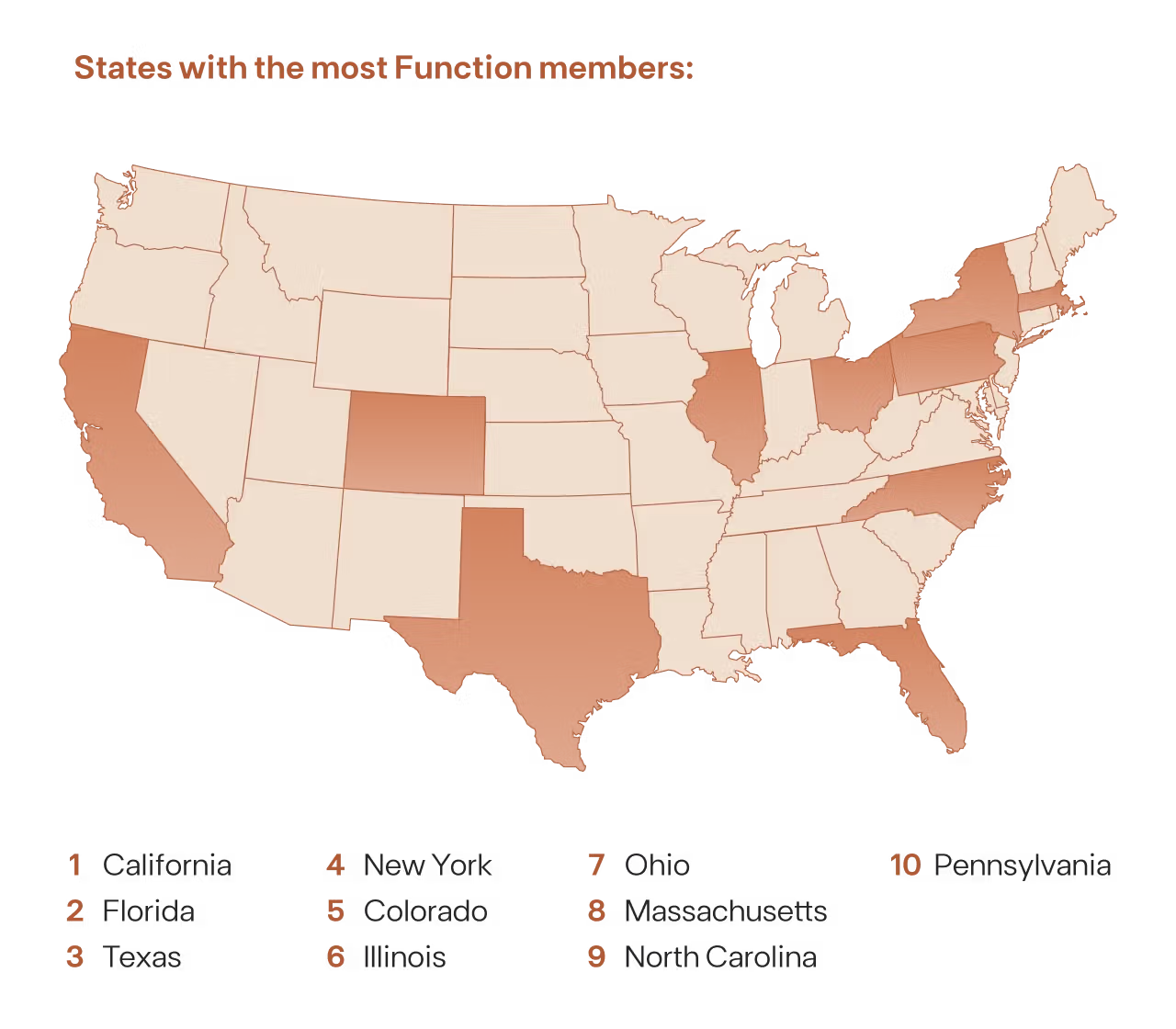
Function members come from every part of the country—but some states showed a stronger interest in testing than others. California, Florida, and Texas lead in total members, as expected from population size. But states like Colorado and Massachusetts stand out for outsized membership compared to their population size.
Because health isn’t always about extremes or change. Sometimes it’s about staying in the normal range, year after year.
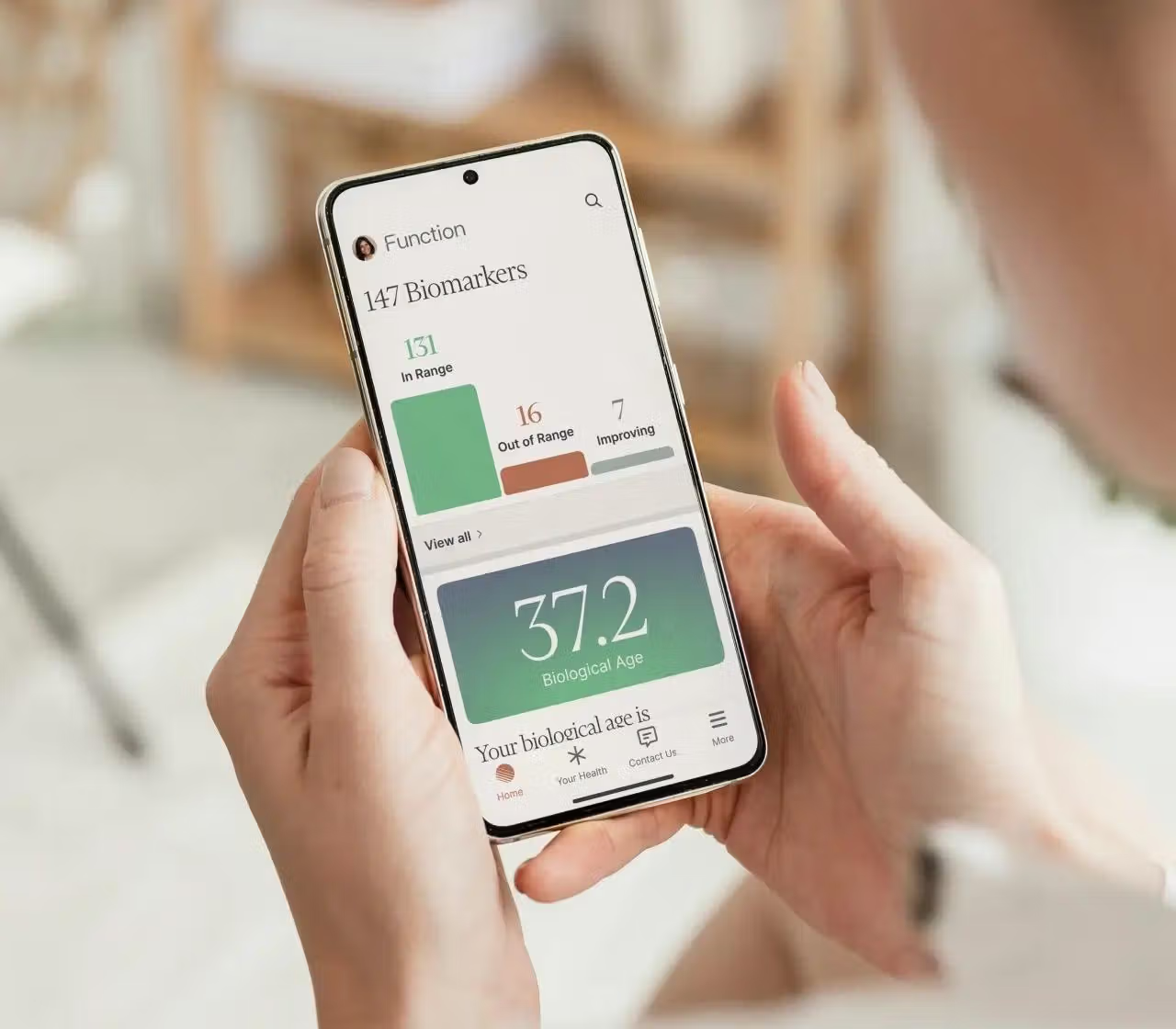
Most standard checkups offer just 26 lab tests annually.
Function membership includes 160+ lab tests annually across every major organ system, selected by the world’s top doctors based on the latest science around disease detection and long-term health impact.
Here’s what came up most often for Function members.
54% have elevated ApoB, which is not typically tested unless by a cardiologist.
23% showed increased levels for autoimmune antibodies, which could suggest a growing trend toward immune dysregulation.
Some female members saw FSH levels begin to rise in mid-30s, which can be indicative of early-stage perimenopause.
More than 65% were outside the optimal range for fasting insulin, which can be present years before signs of prediabetes or type 2 diabetes show up in standard tests.
Function members can uncover risks that standard cholesterol testing alone may miss. Here’s what hundreds of thousands of Apolipoprotein B (ApoB), Lipoprotein(a) [Lp(a)], high-sensitivity C-reactive protein (hs-CRP), and Omega-3s lab tests revealed.
54% had elevated ApoB, which is not typically tested unless by a cardiologist.
High levels of ApoB is a powerful indicator of increased cardiovascular risk.
23% had elevated Lp(a), which can reveal an inherited risk for heart disease.
High Lp(a) increases the risk of heart problems even when other cholesterol numbers look normal. It’s not usually measured in standard cholesterol tests.
40% of members had hs-CRP levels above optimal levels, whereas 14% had hs-CRP levels that significantly elevates risk of cardiovascular disease.
A high level of hs-CRP is associated with inflammation and increased risk of cardiovascular disease.
10% showed elevations in both hs-CRP and Lp(a).
The combination of systemic inflammation and increased genetic risk is associated with worse cardiovascular disease outcomes like heart attack and stroke.
7% showed elevated hs-CRP, Lp(a), and LDL Cholesterol.
This reflects a combination of inflammation, genetic risk, and high circulating LDL cholesterol—factors that together greatly heighten the risk of cardiovascular disease, especially in women
Almost 25% were in the lower quartile for Omega-3 fatty acids.
Lower Omega-3s values are associated with a higher risk for cardiovascular disease.
FYI:
Thyroid-Stimulating Hormone (TSH) is often the only thyroid metric tested by doctors. Function looked deeper—and uncovered signs of autoimmune thyroid disease.
About 15% of women tested had elevated thyroid antibodies (TgAb or TPO) despite having normal TSH levels.
Thyroglobulin Antibodies (TgAb) and Thyroid Peroxidase (TPO) antibodies are important markers for autoimmune thyroid conditions like Hashimoto’s thyroiditis.
Even when thyroid hormone levels appear normal, the presence of TgAb or TPO can indicate a higher risk of future thyroid problems.
About 23% of our members showed increased levels of autoimmune antibodies.
This could suggest a growing trend toward immune dysregulation and early autoimmune activity.
FYI:
In women tested, Follicle-Stimulating Hormone (FSH) levels doubled between their 20s and 30s, suggesting that hormonal changes linked to perimenopause may begin earlier than many expect.
FYI:
Elevated fasting insulin can be present for years before signs of prediabetes or type 2 diabetes show up in standard tests, which often only test for glucose.
More than 65% were outside the optimal range for fasting insulin.
Over 50% had high fasting insulin but normal glucose.
Over 50% also had high fasting insulin but normal HbA1c.
FYI:
National screening guidelines are built around general population averages—but no one’s biology is average. That’s why Function offers the GRAIL Cancer Test, MRI scans, and CT scans that could detect potential signs of cancer and hundreds of other conditions.
Function offers members access to the GRAIL Cancer Test*, which looks for cancer signals across 50+ types of cancer before they become symptomatic.
*Available for an additional cost
**US Preventive Services Task Force (USPSTF) recommendations for cancer screening

In May 2025, Function acquired Ezra to give Function members access to affordable MRI and CT scans.*
Why scans? Because they can see more—often before symptoms appear.
Almost 5% of Ezra members have had a highly suspicious finding for cancer.
*Available for an additional cost

Our social media feeds are filled with health hacks, half-truths, and self-diagnoses. It’s easy to latch onto these when we’re in search of clarity—but health is personal.
That’s where lab testing comes in.
Testing offers something your algorithm can’t: context grounded in your biology and evidence-based medicine.
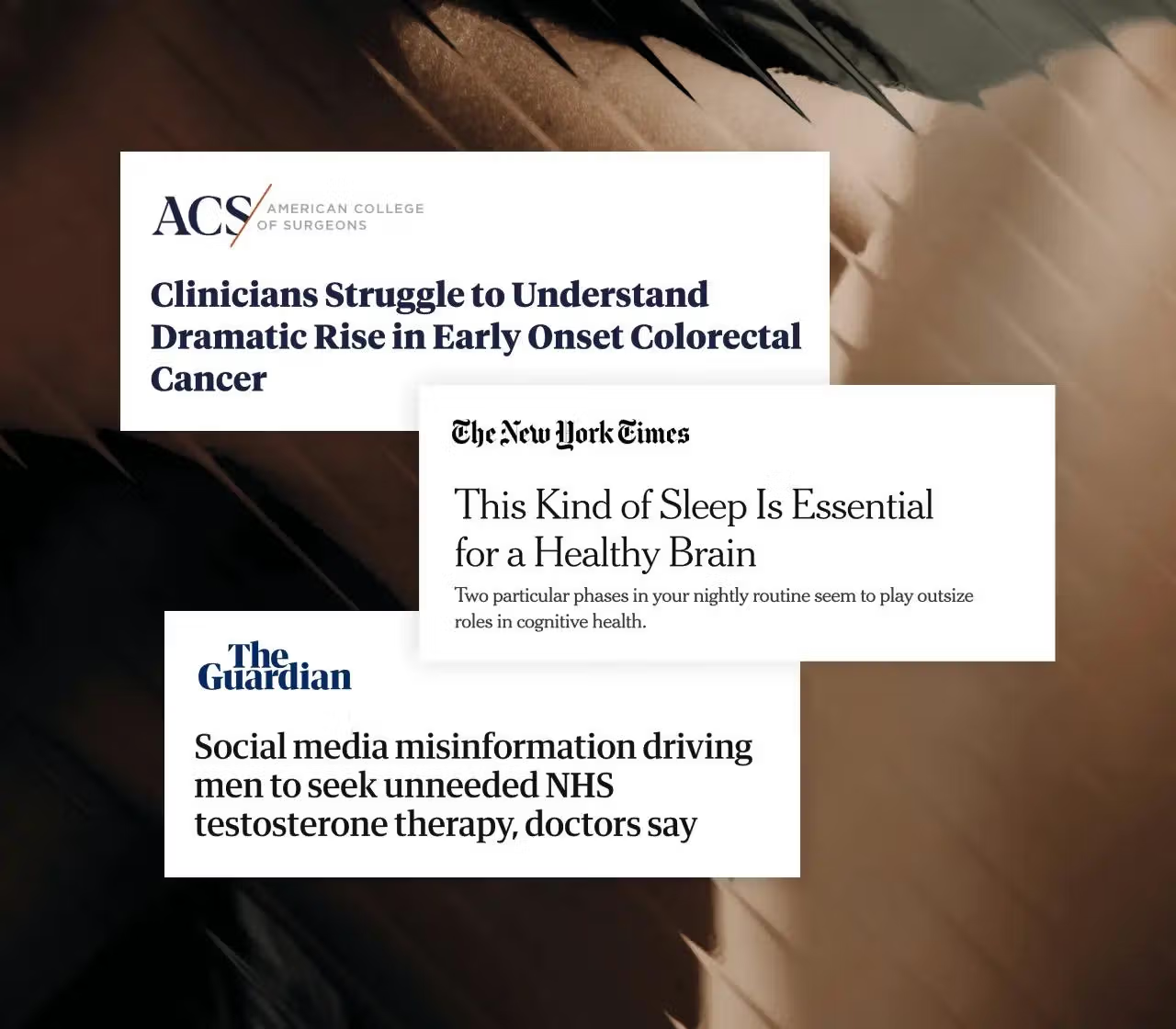
There’s more to male hormones than just testosterone. Look at the bigger picture (and your specific test results).
In our members, testosterone levels declined with increasing age—as expected—but there’s more to the story.
14% of men tested, including roughly 17% between the ages of 20-29, had elevated Estradiol (E2) levels, which is linked to metabolic dysfunction, inflammation, and an increased risk of cardiovascular disease.
Higher E2 relative to testosterone has also been associated with obesity, insulin resistance, atherosclerosis, and erectile dysfunction, suggesting that maintaining a healthy hormone ratio is necessary for long-term metabolic and vascular health.
Follicle-Stimulating Hormone (FSH) and Luteinizing Hormone (LH)—hormones that regulate reproductive health and testicular function—were found to rise significantly in men under 40. FSH levels of tested members doubled, and LH levels tripled between the 20s and 40s age ranges.
This early increase may be linked to chronic health issues like diabetes or to lifestyle factors such as heavy alcohol use and chronic stress, which can contribute to lower testosterone levels and related symptoms.
Cases are rising in people in their 20s, 30s, and 40s—possibly driven by sedentary lifestyles, alcohol misuse, high body fat %, and diets packed with processed foods. Yet screening isn’t officially recommended until age 45.**
Among Function members with a colorectal cancer signal detected by the GRAIL Cancer Test,* 6% were under 45.
The good news? With early detection, the survival rate is 91%.
*Available for an additional cost.
**According to USPSTF screening recommendations.
Promises of sharper focus, better memory, and endless hacks to “reset your dopamine” are everywhere online—and Americans are spending billions a year on brain-health boosters, often with only modest or inconsistent results.
But understanding your measurable brain health biomarkers can provide a clearer picture of better brain health.
Nearly 38% of our members were found to be deficient in key nutrients like vitamin B12, omega-3 fatty acids, vitamin D, and magnesium.
These nutrients have a direct impact on brain health, affecting memory, focus, mood, and, especially, important to prevent neurodegenerative diseases like Alzheimer’s.
14% of members were identified with elevated levels of phosphorylated tau217 (p-tau217), a strong prognostic marker for Alzheimer's disease.
Elevated p-tau217 is a direct indicator of neurodegenerative changes in the brain, aiding in early detection and providing an opportunity to address modifiable risk factors such as diet, physical activity, smoking, and mental and social engagement to support brain health.


