
At a glance
-
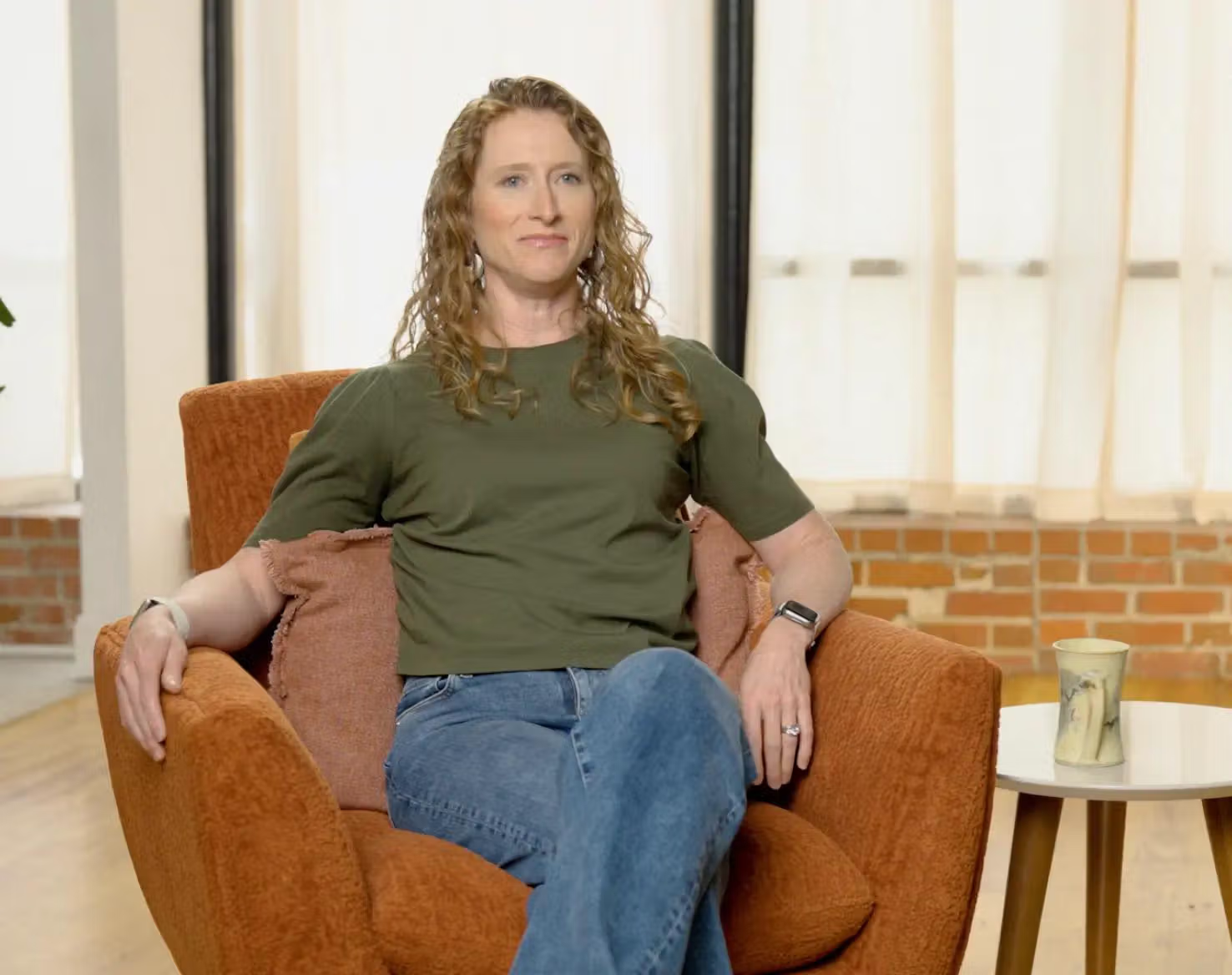
Function member: Emeline, 43, Function Director of Special Projects
-
Function focus: Environmental Toxins, Heart Health
-
Environmental: Above range: Mercury
-
Heart: Above range: LDL Small, LDL Medium, Narrower than optimal: LDL Peak Size

Emeline considered herself healthy. She worked out regularly, tracked her sleep, ate plenty of fresh produce and very little processed food, and cooked at home, focusing on fish as a key source of protein. She felt great. So when she signed up for a Function membership, she wasn’t expecting to find much out of range.
I somewhat went in with the expectation of getting green lights across the board. I was more just doing this out of curiosity to stay healthy, to understand more about my body, to see what I could learn.
Her cholesterol and mercury results took her by surprise.
What standard testing misses
Emeline had never had her cholesterol flagged in a routine cholesterol test (which usually tests for Total Cholesterol, HDL Cholesterol, LDL Cholesterol, and Triglycerides). But Function doesn’t stop there. For a deeper understanding of cardiovascular disease risk, biomarkers like LDL Particle Number and LDL Particle Size are also included in testing.
Emeline’s usual cholesterol markers were normal. But her Function report noted an elevated level of small, dense LDL particles—which is associated with increased cardiovascular risk.
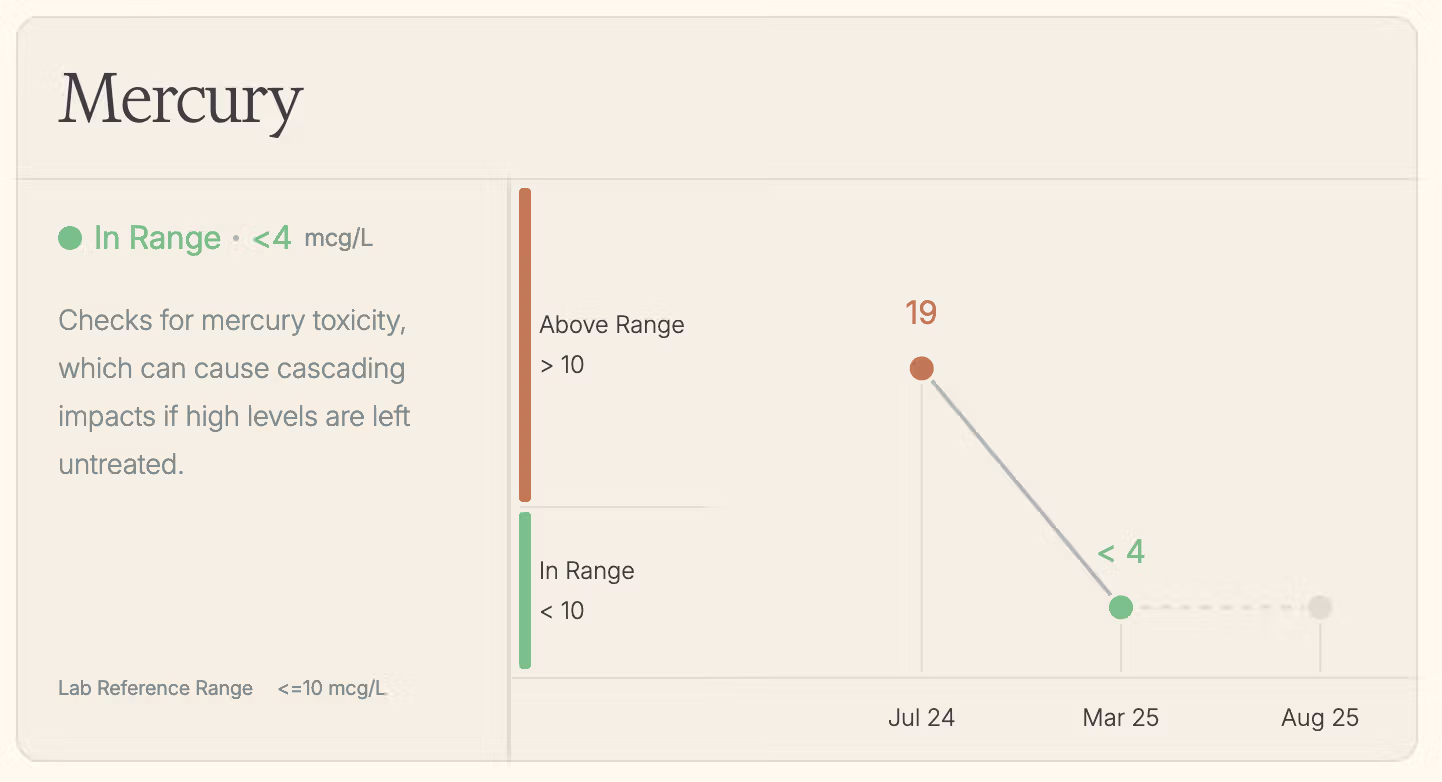
Her mercury level also came as a surprise—at 19 µg/L, it was almost double the top of Function’s in-range value. Though fish was an important part of her diet, mercury risk hadn’t been on her radar.
But reading through her Function report—with a note that predatory fish accumulate the mercury of the fish they eat and can contain higher levels of mercury—connected the dots. One of her favorites, orange roughy, is not only a predatory fish, but it has an extremely long life span (some live well over 100 years), giving it far more opportunity to build up mercury than shorter-lived species.
Symptoms of mercury toxicity can include headaches, tremors, and fatigue, and in more severe cases, issues with muscle coordination, visual problems, and memory loss. Because symptoms can often mimic those of other diseases, mercury toxicity can be difficult to diagnose without testing.
Emeline was shocked.
I wasn’t feeling any symptoms. If I hadn't gotten this really broad range of testing done, it probably wouldn't have surfaced until there were symptoms.
From data to action
Emeline’s Function report didn’t just flag potential issues—the clinical insights steered her toward doable movement and diet tweaks and a simple supplement plan.
My Action Plan that I received through Function gave me the platform to start a routine that ended up being very impactful.
Though Emeline already worked out regularly, she focused more on getting movement throughout her day so she wasn’t sitting at her computer for 12 hours straight.
She swapped out orange roughy for low-mercury options like branzino, salmon, and trout. She also became more mindful about sourcing—learning how different fishing environments, farming practices, and testing standards can influence the quality and safety of the seafood she eats.
She also added supplements recommended in her Function report. To counter mercury exposure Emeline added selenium, which may help blunt mercury’s toxic effects by binding to it. For her heart health, she supplemented with red yeast rice extract, which has been linked to lower cardiovascular disease risk.
This was her first time having a supplement routine.
Having an Action Plan from Function that saved me days of research and came from a trusted source that was personalized based on my actual blood work was so enormously helpful. I don't know where I would have started otherwise.
A 6-month turnaround
At her Mid-Year Test, Emeline’s blood mercury had dropped to 4 µg/L (back in the acceptable range) and her out-of-range cholesterol markers had all improved.
Sometimes, these kinds of changes in lab results accompany feeling healthier. But Emeline felt the same—which highlighted just how important testing was.
Some people are super in touch with their body, which is an amazing skill—what's causing pain, where—but for me, it's a different story. And while I'm honing that skill, it's incredibly useful to have a tool like Function where I can trust and rely on objective data to help inform me what's happening inside my body.
She urges anyone on the fence about testing not to wait until they have symptoms.
“A lack of symptoms doesn't mean that there's no issues. I had a couple of scary skin diagnoses in my 30s. I know how scary it can feel to get a potentially life-impacting diagnosis, but in my experience that fear quickly metamorphoses into empowerment when you have tools to address it.”
Investing in herself
Today, Emeline feels like she’s in the driver’s seat when it comes to her health.
Instead of just paying into an insurance system and hoping that nothing goes wrong, this is an investment that I make every year in my health to understand what's happening inside of my body.
End notes
Lee Y, Siddiqui WJ. Cholesterol Levels. [Updated 2023 Jul 24]. In: StatPearls [Internet]. Treasure Island (FL): StatPearls Publishing; 2025 Jan-. Available from: https://www.ncbi.nlm.nih.gov/books/NBK542294/
Quesada JA, Bertomeu-González V, Orozco-Beltrán D, et al. The benefits of measuring the size and number of lipoprotein particles for cardiovascular risk prediction: A systematic review and meta-analysis. Clínica e Investigación en Arteriosclerosis. 2023;35(4):165-177. doi: https://doi.org/10.1016/j.arteri.2022.11.001
Lavoie, R. A., Jardine, T. D., Chumchal, M. M., Kidd, K. A., & Campbell, L. M. (2013). Biomagnification of mercury in aquatic food webs: a worldwide meta-analysis. Environmental science & technology, 47(23), 13385–13394. https://doi.org/10.1021/es403103t
Horn, P.L.; Ó Maolagáin, C. (2019). A comparison of age data of orange roughy (Hoplostethus atlanticus) from the central Louisville Seamount Chain in 1995 and 2013–15.
Cleveland Clinic. (2022, July 7). Mercury poisoning: Symptoms, causes & treatment. https://my.clevelandclinic.org/health/diseases/23420-mercury-poisoning
Posin SL, Kong EL, Sharma S. Mercury Toxicity. [Updated 2023 Aug 8]. In: StatPearls [Internet]. Treasure Island (FL): StatPearls Publishing; 2025 Jan-. Available from: https://www.ncbi.nlm.nih.gov/books/NBK499935/
Spiller, H. A. (2017). Rethinking mercury: the role of selenium in the pathophysiology of mercury toxicity. Clinical Toxicology, 56(5), 313–326. https://doi.org/10.1080/15563650.2017.1400555
Cicero, A. F. G., Fogacci, F., Stoian, A. P., & Toth, P. P. (2023). Red Yeast Rice for the Improvement of Lipid Profiles in Mild-to-Moderate Hypercholesterolemia: A Narrative Review. Nutrients, 15(10), 2288. https://doi.org/10.3390/nu15102288