
At a glance
-
Function member: Jennifer, member since 2025
-
Function focus: Iron
-
Discovery: Low Ferritin
-
Biomarker imbalances: Ferritin

The symptoms she almost ignored
For about a year, Jennifer had been losing more hair than usual. She was constantly drained in a way that sleep didn't fix. And every few months, there was a small amount of blood in her stool.
Each symptom felt easy to ignore. Even as a nurse.
I'm a mom. I work nights. I just brushed it off like, this is normal. This is fine.
It wasn't until both of her parents were diagnosed with cancer within a single year that something shifted.
Her father's cancer had been caught because of abnormal lab values. That detail stayed with her.
It really just pushed me to want to know more about my own body. I didn't even know anything about my labs.
One day, a Function ad appeared on her Instagram.
She joined right away.
The number that connected everything
When her results came back, one number caught her attention.
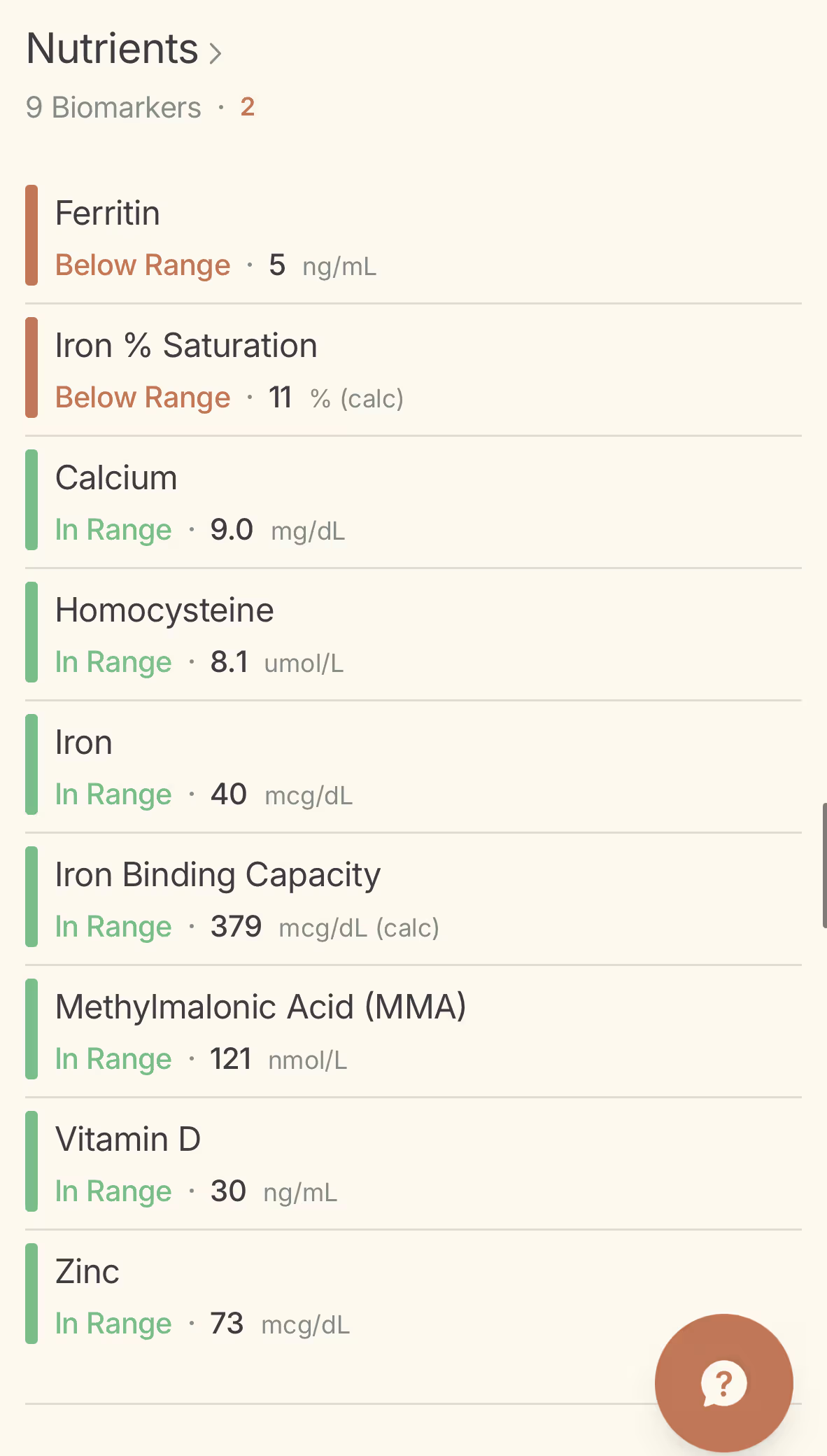
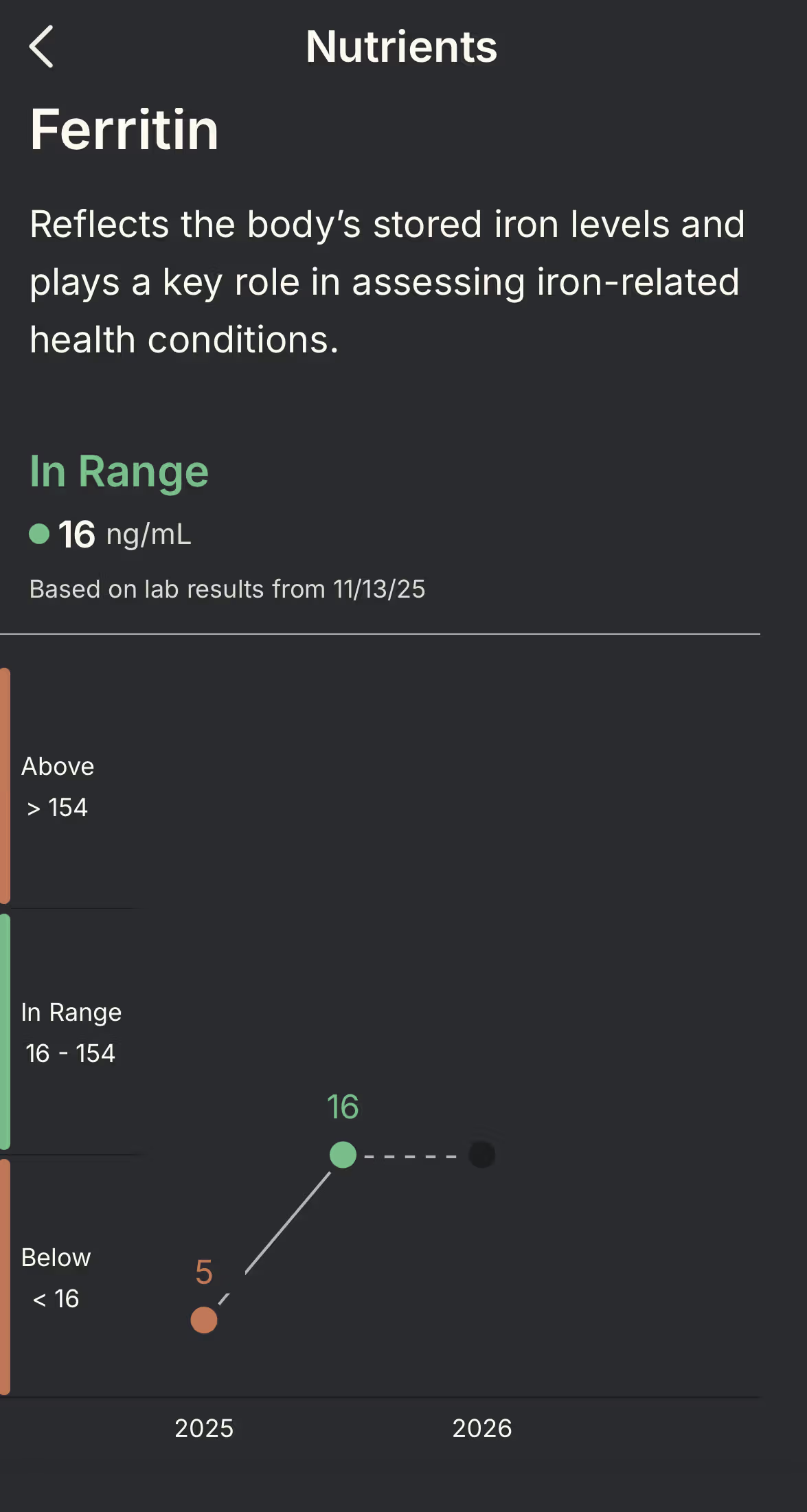
Her Ferritin was 5 ng/mL. The lower limit of the reference range for women her age is 16.
Jennifer had never heard of Ferritin. She didn't know it is a key protein responsible for storing iron in the body and a marker of iron deficiency that might not be included in typical lab testing.
Then it hit her.
The blood in her stool. The exhaustion. The hair loss. She had been dismissing each symptom individually. But together, they pointed in the same direction.
It just clicked that it could be iron deficiency anemia and that blood loss could be related to something in the colon.
Colon cancer rates are rising in younger adults. She was 37. Screening typically doesn’t start until 45.
She immediately called her doctor.
“Someone was looking out for you”
Her doctor sent her for a colonoscopy.
Jennifer was still groggy in the recovery room when the doctor came in.
"Someone was looking out for you that you got this done early."
They had found 2 extremely large, sessile serrated polyps. Pre-cancerous, higher-risk, and so large they would have to be removed in pieces. A follow-up colonoscopy was already scheduled.
The doctor was direct.
She basically said, if you waited until normal screening time, you probably would have had full blown colon cancer.
"I dodged a bullet. My life could have been totally different."
Taking her health back
Jennifer is now on iron supplements. She's eating more iron-rich foods and cutting out processed foods almost entirely. She's working on protecting her sleep, even on the nights when the schedule makes it hard. Her hair is growing back and her energy is returning.
I probably feel the best I have. Even better than I did in my 20s.
As a nurse, she's seen what happens when people wait. Now she's one of the people telling others not to.
She encouraged her husband, even her coworkers, to join Function.
"Get your baseline labs done. You want to catch things early.”
Function helped me be proactive and it may have truly changed the course of my future.

End notes
Warner MJ, Kamran MT. Iron Deficiency Anemia. National Library of Medicine. Published February 15, 2026. https://www.ncbi.nlm.nih.gov/books/NBK448065/
Barney J, Moosavi L. Iron. PubMed. Published July 10, 2023. https://www.ncbi.nlm.nih.gov/books/NBK542171/
CDC. Symptoms of Colorectal Cancer. Colorectal Cancer. Published June 12, 2024. https://www.cdc.gov/colorectal-cancer/symptoms/index.html
Mayo Clinic. Iron deficiency anemia. Mayo Clinic. Published January 4, 2022. https://www.mayoclinic.org/diseases-conditions/iron-deficiency-anemia/symptoms-causes/syc-20355034
Sung H, Siegel RL, Laversanne M, et al. Colorectal cancer incidence trends in younger versus older adults: an analysis of population-based cancer registry data. The Lancet Oncology. 2024;26(1). doi: https://doi.org/10.1016/s1470-2045(24)00600-4
Chambers AC, Merriel SWD, Beard G, Greer H, Messenger DE, McCarthy K. Early onset colorectal cancer. BMJ. 2025;389:e082452. doi: https://doi.org/10.1136/bmj-2024-082452
U.S. Preventive Services Task Force. Colorectal cancer: Screening. U.S. Preventive Services Task Force. Published May 18, 2021. https://www.uspreventiveservicestaskforce.org/uspstf/recommendation/colorectal-cancer-screening
CDC. Screening for Colorectal Cancer. Colorectal Cancer. Published 2024. https://www.cdc.gov/colorectal-cancer/screening/index.html
Understanding Your Pathology Report: Colon Polyps (Sessile or Traditional Serrated Adenomas). Cancer.org. Published July 7, 2023. https://www.cancer.org/cancer/diagnosis-staging/tests/pathology-reports/colon-pathology/colon-polyps-sessile-or-traditional-serrated-adenomas.html
Kahi CJ. Screening Relevance of Sessile Serrated Polyps. Clinical Endoscopy. 2019;52(3):235-238. doi: https://doi.org/10.5946/ce.2018.112