
At a glance
-
Colorectal cancer is one of the most common cancers in the US, yet it is highly survivable when caught early. The problem: Its earliest symptoms can sometimes look like everyday digestive issues. Knowing what to watch for and when to act puts you in more control of your health.
Colorectal cancer often develops quietly, with symptoms that are easy to dismiss as digestive changes due to other causes. A shift in bowel habits, persistent bloating, or unexplained fatigue can feel insignificant at first. But understanding which changes matter—and when to speak to a doctor—is key. The exact percentage of colorectal cancer cases that are asymptomatic at diagnosis is difficult to assess, but in one study, 55.9% of those diagnosed with colorectal cancer after undergoing screening were asymptomatic.
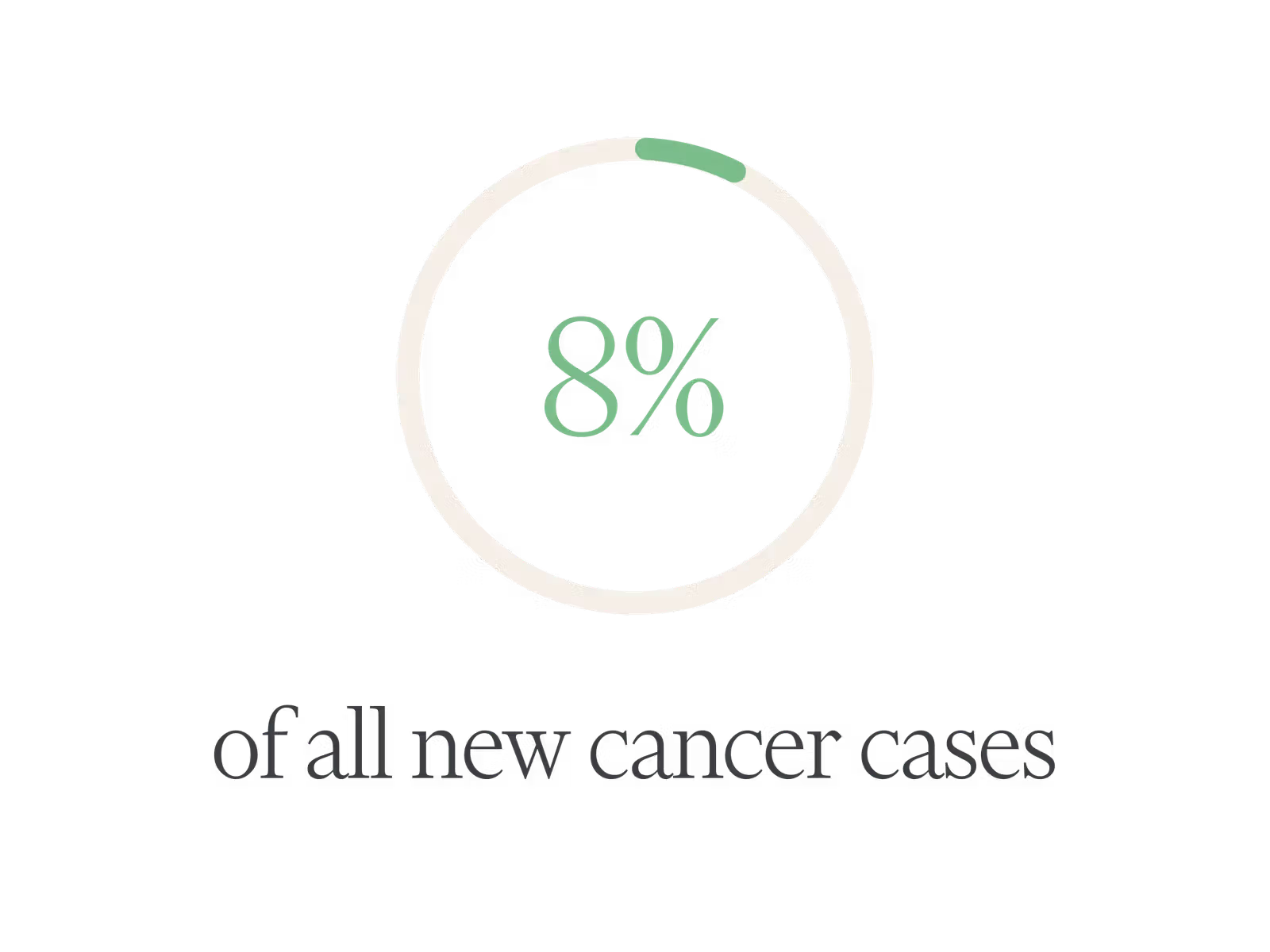
Colorectal cancer is one of the most common cancers in the US, accounting for approximately 8% of all new cancer cases each year. More than 75% of diagnoses occur in people 55 and over, though rates are rising in adults under 55. Here, we break down key signs and symptoms, and why they're so often overlooked.
Why symptoms are often overlooked
Early symptoms of colorectal cancer may overlap with common gastrointestinal conditions, such as:
- Irritable bowel syndrome (IBS)
- Hemorrhoids (swollen blood vessels in the rectum or anus)
- Abdominal pain
Bowel-related symptoms can feel embarrassing to discuss, and people might delay bringing them up with their doctor.
Persistent change in bowel habits
One-off changes to bowel habits that resolve on their own are usually not worrisome. But persistent changes, including bouts of diarrhea, constipation, or sudden urges to have a bowel movement, are worth discussing with your doctor.
There are many possible causes of changing bowel habits. Consistency and duration of change from what is normal for you are important reasons to check in with your doctor.
Blood in the stool
Bright red blood in your stool or on toilet paper can be caused by hemorrhoids or a tear in the anal canal lining, but it can also be a sign of colorectal cancer. Stools that are dark red or black in appearance may indicate bleeding higher up in the bowel or stomach. If you notice any of these changes, it’s important to get them evaluated.
Unexplained abdominal discomfort
Feeling bloated, experiencing cramps, or sensing that your bowel hasn't fully emptied are symptoms that could be attributed to diet, particularly in people with preexisting dietary conditions. But these can also signal something more serious. Speaking to your doctor helps identify the cause and rule out more serious conditions.
Unexplained weight loss
Changes in appetite, losing weight, or feeling weak can be an early warning sign of a gastrointestinal issue—or colorectal cancer. It’s important to discuss these changes with a doctor, particularly if you also have other symptoms on this list.
Persistent fatigue
Feeling persistently exhausted can be caused by anemia (when the body doesn’t make enough red blood cells ), which sometimes results from slow, hidden bleeding in the gut. Although it's easy to attribute fatigue to prolonged stress or poor sleep, other causes might get missed if these symptoms are not properly evaluated.
Feeling like your bowel hasn't fully emptied
Tenesmus is often accompanied by straining, cramping, and low output. There are other conditions besides cancer that can be associated with tenesmus, such as inflammatory bowel disease. If you’re experiencing these symptoms, it may be worth mentioning to your doctor.
What your body's signals could be telling you
Specific lab tests can show early signs of change, even before symptoms become obvious:
- Red blood cell count: A lab test that measures red blood cell levels. Anemia, especially iron-deficiency anemia, could be an early sign of bleeding in the GI tract.
- Ferritin: Low ferritin indicates depleted iron stores, often a downstream effect of nutritional deficits or possible GI blood loss.
- hs-CRP: Elevated High-sensitivity C-Reactive Protein (hs-CRP) signals low-grade systemic inflammation, which is associated with many conditions, including some precancerous growths.
Who is at higher risk?
Several factors might increase your risk of colorectal cancer. These include:
- Age: Being over 50, though rates are rising in people under 50
- Family history: A first-degree relative with colorectal cancer
- Genetic conditions: Familial adenomatous polyposis (FAP) and Lynch syndrome
- Inflammatory Bowel Disease: Such as ulcerative colitis and Crohn's disease
- Diet: A long-term diet high in processed and red meat and low in fiber
- Excess weight: Studies estimate that the fraction of colorectal cancer cases attributable to overweight and obesity may be 15% to 23%.
- Smoking: Can increase the relative risk of some colorectal cancer types by as much as 20% to 39%.
Having risk factors increases your likelihood, but it doesn't guarantee a diagnosis. Some people who get colorectal cancer might not have any established risk factors.
When to see a doctor
If you experience any of the following for an extended period of time, or have several symptoms together, contact your doctor.
- Blood in your stool or a change in stool color (red, black)
- Low red blood cell count due to low iron
- Ongoing abdominal pain
- A persistent change in bowel habits
Checking in with your doctor can help rule out more serious causes.
Colorectal cancer screening: what you need to know
The US Preventive Services Task Force (USPSTF), a panel of national experts that works to improve the health of people nationwide, recommends that adults at average risk begin colorectal cancer screening at age 45. Options include stool-based tests, colonoscopy, and other direct visual imaging approaches.
These screening approaches can find signs of colorectal cancer before symptoms appear. When caught at the earliest stage, more than 90% of people survive 5 or more years after diagnosis.
Many eligible adults still don't complete recommended screening, making awareness of these options genuinely important.
Taking a proactive approach for the long-term
Function gives you access to 160+ lab tests every year, including Red Blood Cell Count, Ferritin, hs-CRP and more—all reviewed by a licensed clinician and translated into plain language so you know what to do next. You also get member pricing on MRIs and CTs to look for signs of hundreds of potential conditions. Combined together, you get a more complete view to help you own your health.
End notes
- Schult AL, Botteri E, Hoff G, et al. Detection of cancers and advanced adenomas in asymptomatic participants in colorectal cancer screening: a cross-sectional study. Published online July 1, 2021. doi:10.1136/bmjopen-2020-048183
- Cancer of the Colon and Rectum - Cancer Stat Facts. SEER. Accessed April 21, 2026. https://seer.cancer.gov/statfacts/html/colorect.html
- Siegel RL, Kratzer TB, Wagle NS, Sung H, Jemal A. Cancer statistics, 2026. CA: A Cancer Journal for Clinicians. 2026;76(1):e70043. doi:10.3322/caac.70043
- Sung H, Siegel RL, Laversanne M, et al. Colorectal cancer incidence trends in younger versus older adults: an analysis of population-based cancer registry data. The Lancet Oncology. 2025;26(1):51-63. doi:10.1016/S1470-2045(24)00600-4
- Wu X, Wang J, Ye Z, et al. Risk of Colorectal Cancer in Patients With Irritable Bowel Syndrome: A Meta-Analysis of Population-Based Observational Studies. Front Med. 2022;9. doi:10.3389/fmed.2022.819122
- Wu EB, Sung FC, Lin CL, Wu KL, Chen KB. Colorectal Cancer Risk in Patients with Hemorrhoids: A 10-Year Population-Based Retrospective Cohort Study. Int J Environ Res Public Health. 2021;18(16):8655. doi:10.3390/ijerph18168655
- Fritz CDL, Otegbeye EE, Zong X, et al. Red-flag signs and symptoms for earlier diagnosis of early-onset colorectal cancer. J Natl Cancer Inst. 2023;115(8):909-916. doi:10.1093/jnci/djad068
- Reynolds LM, Bissett IP, Consedine NS. Emotional predictors of bowel screening: the avoidance-promoting role of fear, embarrassment, and disgust. BMC Cancer. 2018;18(1):518. doi:10.1186/s12885-018-4423-5
- Changes in Bowel Habits & What They Mean. Cleveland Clinic. Accessed April 21, 2026. https://my.clevelandclinic.org/health/symptoms/changes-in-bowel-habits
- Rectal Bleeding: What It Means & When to Worry. Cleveland Clinic. Accessed April 21, 2026. https://my.clevelandclinic.org/health/symptoms/14612-rectal-bleeding
- Melchior C, Algera J, Colomier E, Törnblom H, Simrén M. Irritable bowel syndrome with food‐related symptoms: Future directions in the clinical management. United European Gastroenterol J. 2022;10(6):594-600. doi:10.1002/ueg2.12265
- Colon cancer - Symptoms and causes. Mayo Clinic. Accessed April 21, 2026. https://www.mayoclinic.org/diseases-conditions/colon-cancer/symptoms-causes/syc-20353669
- Colon Cancer Symptoms. June 20, 2024. Accessed April 21, 2026. https://www.hopkinsmedicine.org/health/conditions-and-diseases/colon-cancer/colon-cancer-symptoms
- Tenesmus: Symptoms, Causes & Treatment. Cleveland Clinic. Accessed April 21, 2026. https://my.clevelandclinic.org/health/symptoms/24107-tenesmus
- Virdee PS, Kirtley S, Elhussein L, Watkinson PJ, Holt TA, Birks J. Components of the full blood count as risk factors for colorectal cancer detection: a systematic review protocol. Published online December 1, 2019. doi:10.1136/bmjopen-2019-032759
- CHARDALIAS L, PAPACONSTANTINOU I, GKLAVAS A, POLITOU M, THEODOSOPOULOS T. Iron Deficiency Anemia in Colorectal Cancer Patients: Is Preoperative Intravenous Iron Infusion Indicated? A Narrative Review of the Literature. Cancer Diagn Progn. 2023;3(2):163-168. doi:10.21873/cdp.10196
- Almilaji O, Parry SD, Docherty S, Snook J. Evidence for improved prognosis of colorectal cancer diagnosed following the detection of iron deficiency anaemia. Sci Rep. 2021;11(1):13055. doi:10.1038/s41598-021-92623-z
- Kim S, Song S, Kim YS, Yang SY, Lee JE. The association between predicted inflammatory status and colorectal adenoma. Sci Rep. 2020;10(1):2433.
- Mehraban Far P, Alshahrani A, Yaghoobi M. Quantitative risk of positive family history in developing colorectal cancer: A meta-analysis. World J Gastroenterol. 2019;25(30):4278-4291. doi:10.3748/wjg.v25.i30.4278
- Menon G, Kasi A. Familial Adenomatous Polyposis. In: StatPearls. StatPearls Publishing; 2026. Accessed April 21, 2026. http://www.ncbi.nlm.nih.gov/books/NBK538233/
- Sherman S, Ojha SK, Menon G, Laslett N. Hereditary Nonpolyposis Colon Cancer (Lynch Syndrome). In: StatPearls. StatPearls Publishing; 2025. Accessed April 21, 2026. http://www.ncbi.nlm.nih.gov/books/NBK564511/
- Sato Y, Tsujinaka S, Miura T, Kitamura Y, Suzuki H, Shibata C. Inflammatory Bowel Disease and Colorectal Cancer: Epidemiology, Etiology, Surveillance, and Management. Cancers (Basel). 2023;15(16):4154. doi:10.3390/cancers15164154
- Ungvari Z, Fekete M, Varga P, et al. Association between red and processed meat consumption and colorectal cancer risk: a comprehensive meta-analysis of prospective studies. GeroScience. 2025;47(3):5123-5140. doi:10.1007/s11357-025-01646-1
- Mandic M, Safizadeh F, Hoffmeister M, Brenner H. Overcoming underestimation of the share of colorectal cancer cases attributable to excess weight: a population‐based study. Obesity (Silver Spring). 2025;33(1):156-163. doi:10.1002/oby.24164
- Safizadeh F, Mandic M, Hoffmeister M, Brenner H. Colorectal Cancer and Central Obesity. JAMA Netw Open. 2025;8(1):e2454753. doi:10.1001/jamanetworkopen.2024.54753
- Gram IT, Park SY, Wilkens LR, Haiman CA, Le Marchand L. Smoking-Related Risks of Colorectal Cancer by Anatomical Subsite and Sex. Am J Epidemiol. 2020;189(6):543-553. doi:10.1093/aje/kwaa005
- Colorectal Cancer Signs and Symptoms | Signs of Colorectal Cancer. Accessed April 23, 2026. https://www.cancer.org/cancer/types/colon-rectal-cancer/detection-diagnosis-staging/signs-and-symptoms.html
- US Preventive Services Task Force. Screening for Colorectal Cancer: US Preventive Services Task Force Recommendation Statement. JAMA. 2021;325(19):1965-1977. doi:10.1001/jama.2021.6238
- Screening Tests to Detect Colorectal Cancer and Polyps - NCI. November 1, 2024. Accessed April 23, 2026. https://www.cancer.gov/types/colorectal/screening-fact-sheet
- Kowalkowski H, Austin G, Guo Y, Miller-Wilson LA, DaCosta Byfield S. Patterns of colorectal cancer screening and adherence rates among an average-risk population enrolled in a national health insurance provider during 2009–2018 in the United States. Prev Med Rep. 2023;36:102497. doi:10.1016/j.pmedr.2023.102497