At a glance
-
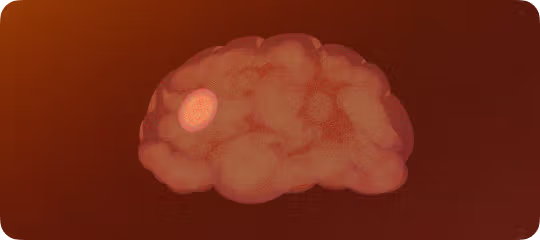
Brain tumors are rare, but the symptoms associated with them—headaches, fatigue, vision changes—are common and may be benign. Understanding which symptoms actually warrant concern—and which don't—helps you stay informed without unnecessary anxiety. Here we break down the most common symptom claims and what the science actually says.
Why brain tumor symptoms are often misunderstood
Brain tumor symptoms can be caused by many factors, including increased pressure in the skull from tumor growth within a confined space, direct disruption of brain tissue by tumor growth, structural changes to neurons and supporting cells, remodeling of blood vessel networks, and increased inflammation.
Symptoms can include:
- Headaches
- Fatigue
- Persistent nausea, vomiting, or drowsiness
- Changes in vision
- Personality or memory changes
- Speech problems
- Weakness or paralysis in certain parts of the body
- Seizures
Many of these—headaches, fatigue, nausea, subtle vision changes—are common and could be caused by other health conditions. A single symptom on its own is not typically a cause for concern. Things to consider include the severity and persistence of symptoms, symptoms appearing together, and if there is a noticeable change from your baseline health status.
Fact or fiction? Common brain tumor symptom claims
"Any headache could be a brain tumor"
Fiction (in most cases)
Because brain tumors are rare, most headaches can be linked to more common causes such as sleep disruption, stress, or dehydration.
Headaches that deserve a closer look often share some, but not necessarily all, of the following characteristics:
- A new or persistent pain or pressure in the head
- Pain that worsens over time
- Headaches that wake you up at night
- Headaches that are worse in the morning
- Nausea or vomiting alongside the headache
- Changes in movement, speech, or thinking
"Seizures are a red flag"
Fact
Seizures can cause jerking or twitching of the limbs or the whole body. Other symptoms may include confusion or loss of consciousness. A first-ever seizure in an adult always needs urgent medical attention.
Seizures are associated with brain tumors, but there are other causes, including epilepsy, diabetes, and electrolyte imbalances.
Whatever the cause, don't wait. Get it checked immediately by a healthcare professional.
"Blurred vision likely means brain cancer"
Fiction (usually)
Small changes in vision over time are often a normal part of aging or the result of common eye conditions.
Some vision changes are worth discussing with a doctor:
- Blurred or double vision
- Flashing lights
- Tunnel vision (loss of peripheral vision)
On their own, these kinds of changes can be related to other causes. But if they are persistent, progressive, or accompanied by other neurological symptoms, such as changes in balance, speech, or coordination, you may want to seek medical evaluation. A doctor can assess the context, including timing, severity, and other associated symptoms.
"Personality changes can be a symptom"
Fact (in certain cases)
Different parts of the brain control different functions. A tumor in the frontal lobe, an area responsible for personality, behavior, decision-making, and movement, can cause gradual changes in:
- Judgement
- Mood
- Behavior
It's important to distinguish these changes from more common causes such as chronic stress, depression, or conditions such as dementia.
"Nausea and vomiting signal a brain tumor"
Fiction (usually)
Nausea and vomiting are common symptoms for a variety of conditions and illnesses, particularly those affecting the digestive system. If they appear on their own and resolve within a day or two, they're less likely to be a cause for concern.
If symptoms persist or worsen without a clear explanation or appear alongside other neurological symptoms, you should see your doctor. They can help put the symptoms in context and assess possible underlying causes.
"Brain tumors always cause severe symptoms early"
Fiction
Some brain tumors grow slowly, resulting in you having no symptoms at all—or only subtle ones–in the early stages.
Tumor type and location can shape how symptoms develop and when.
That's why paying attention to unusual or persistent changes in your health matters, especially when symptoms appear together or gradually worsen.
Early warning signs to take seriously
Keeping a record of any new or persistent symptoms is one of the most practical steps you can take before seeing a doctor.
Key things to note and track:
- Weakness or numbness in the arms or legs
- A first-ever seizure
- Headaches that gradually worsen, especially when paired with vision, balance, or other neurological changes
- Confusion or noticeable memory problems
- Difficulty speaking or finding words
- Problems with balance and coordination
Multiple new symptoms lasting several weeks should prompt you to seek medical advice.
How brain tumors are identified
When there is a suspected brain tumor, imaging gives doctors a detailed look at the structures inside the skull. Here's how the two main types are used.
Magnetic resonance imaging (MRI)
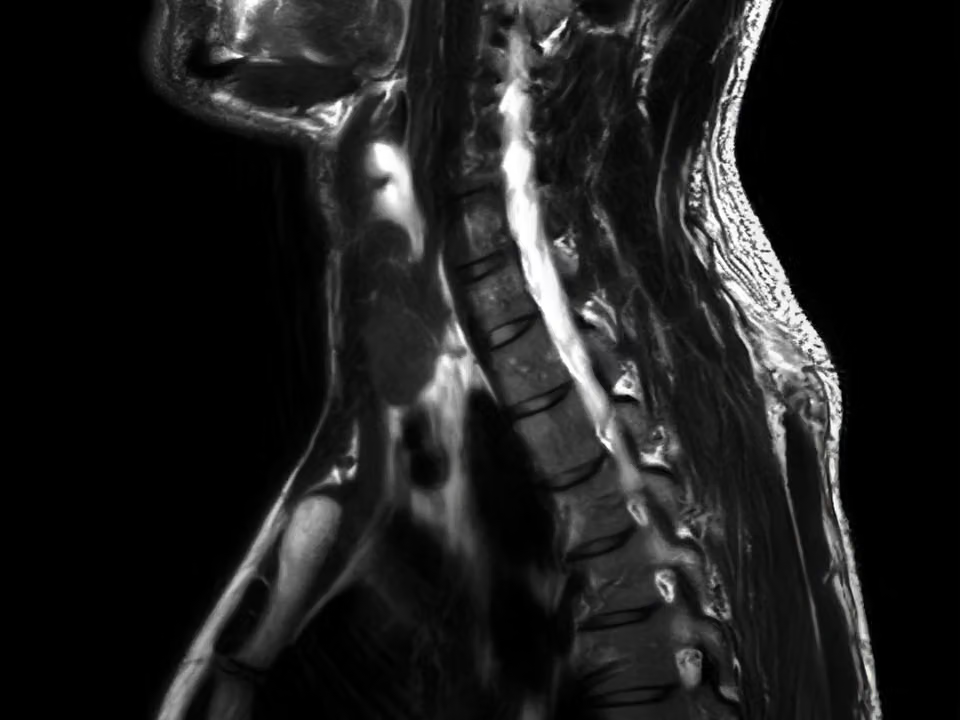
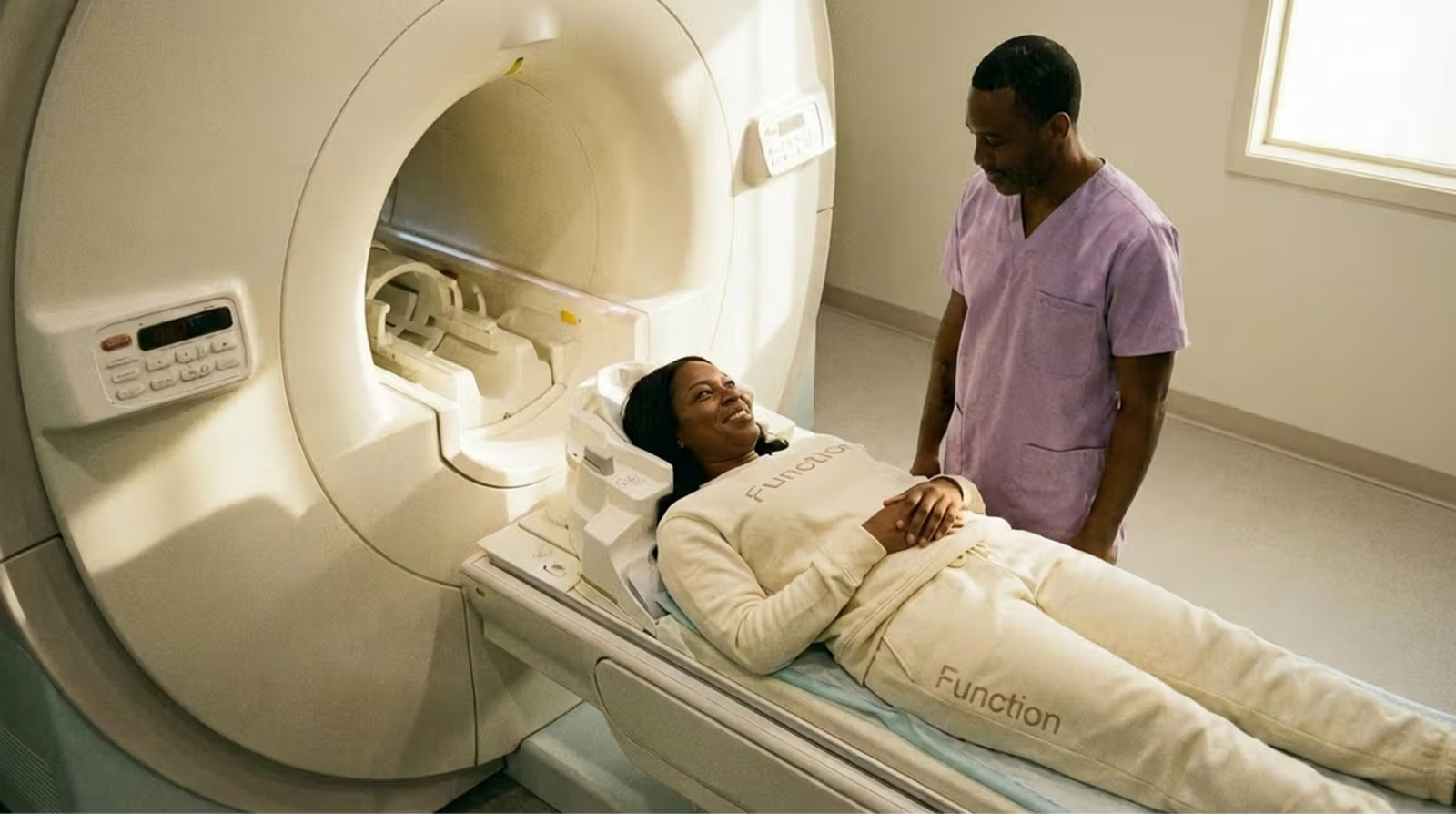
MRI uses radio waves and powerful magnets to create highly detailed 3D images of the brain.
An MRI can help identify signs of brain tumors and other neurological conditions—sometimes before symptoms become significant. Function provides access to MRIs covering the head, along with the neck, abdomen, and pelvis, to see signs of cancer and hundreds of other conditions, all in about 22 minutes. It's a powerful tool to get a more complete view of your health.
Computed tomography (CT)
A CT uses X-ray techniques to create a detailed 3D picture. CT is commonly used in emergency settings because it's faster than MRI, and it's an option for people who can't have an MRI, such as those with certain pacemakers.
Taking a proactive approach to your brain health
Brain tumor symptoms are often misunderstood because many of the symptoms have far more common causes. What matters more is the pattern: persistence, progression, and combination, especially involving neurological symptoms like movement, speech, or seizures.
You don't have to wait for symptoms to start paying attention to your health. MRIs can look for signs of brain cancer and hundreds of other conditions. Schedule your MRI today.
End notes
- Cancer of the Brain and Other Nervous System - Cancer Stat Facts. SEER. Accessed April 16, 2026. https://seer.cancer.gov/statfacts/html/brain.html
- Brain Tumors and Brain Cancer. Accessed April 29, 2026. https://www.hopkinsmedicine.org/health/conditions-and-diseases/brain-tumor
- Brain tumor - Symptoms and causes. Mayo Clinic. Accessed April 16, 2026. https://www.mayoclinic.org/diseases-conditions/brain-tumor/symptoms-causes/syc-20350084
- Sorribes IC, Moore MNJ, Byrne HM, Jain HV. A Biomechanical Model of Tumor-Induced Intracranial Pressure and Edema in Brain Tissue. Biophys J. 2019;116(8):1560-1574. doi:10.1016/j.bpj.2019.02.030
- Xue C. The role of the nervous system in the development of brain tumorigenesis: From neurons to the tumor microenvironment. Clin Res Oncol. 2025;Volume 1(Issue 1):24-37. doi:10.46439/Oncology.1.006
- Brain Tumor Symptoms. UT MD Anderson. Accessed April 17, 2026. https://www.mdanderson.org/cancer-types/brain-tumor/brain-tumor-symptoms.html
- Headache | National Institute of Neurological Disorders and Stroke. Accessed April 16, 2026. https://www.ninds.nih.gov/health-information/disorders/headache
- Seizures - Symptoms and causes. Mayo Clinic. Accessed April 17, 2026. https://www.mayoclinic.org/diseases-conditions/seizure/symptoms-causes/syc-20365711
- CDC. First Aid for Seizures. Epilepsy. April 1, 2025. Accessed April 29, 2026. https://www.cdc.gov/epilepsy/first-aid-for-seizures/index.html
- What Are Seizure Symptoms? Cleveland Clinic. Accessed April 16, 2026. https://my.clevelandclinic.org/health/diseases/22789-seizure
- Aging and Your Eyes. National Institute on Aging. July 28, 2021. Accessed April 29, 2026. https://www.nia.nih.gov/health/vision-and-vision-loss/aging-and-your-eyes
- Vision problems: MedlinePlus Medical Encyclopedia. Accessed April 29, 2026. https://medlineplus.gov/ency/article/003029.htm
- Moroşan GC, Moroşan AC, Ionescu C, Sava A. Neuropsychiatric symptoms as early indicators of brain tumors. Arch Clin Cases. 2024;11(4):120-126. doi:10.22551/2024.45.1104.10302
- CDC. About Dementia. Alzheimer’s Disease and Dementia. Published August 17, 2024. https://www.cdc.gov/alzheimers-dementia/about/index.html
- Nausea and Vomiting. Accessed April 29, 2026. https://medlineplus.gov/nauseaandvomiting.html
- Magnetic Resonance Imaging (MRI) of the Spine and Brain. May 28, 2024. Accessed April 17, 2026. https://www.hopkinsmedicine.org/health/treatment-tests-and-therapies/magnetic-resonance-imaging-mri-of-the-spine-and-brain
- Patel PR, De Jesus O. CT Scan. In: StatPearls. StatPearls Publishing; 2026. Accessed April 17, 2026. http://www.ncbi.nlm.nih.gov/books/NBK567796/