At a glance
-
Function member: Mitchell, member since 2026
-
Function focus: Galleri® Multi-Cancer Test
-
Discovery: Stage 3 colorectal cancer
The next set of answers
Around the new year, Mitchell noticed something was off.
His bowel habits had changed.
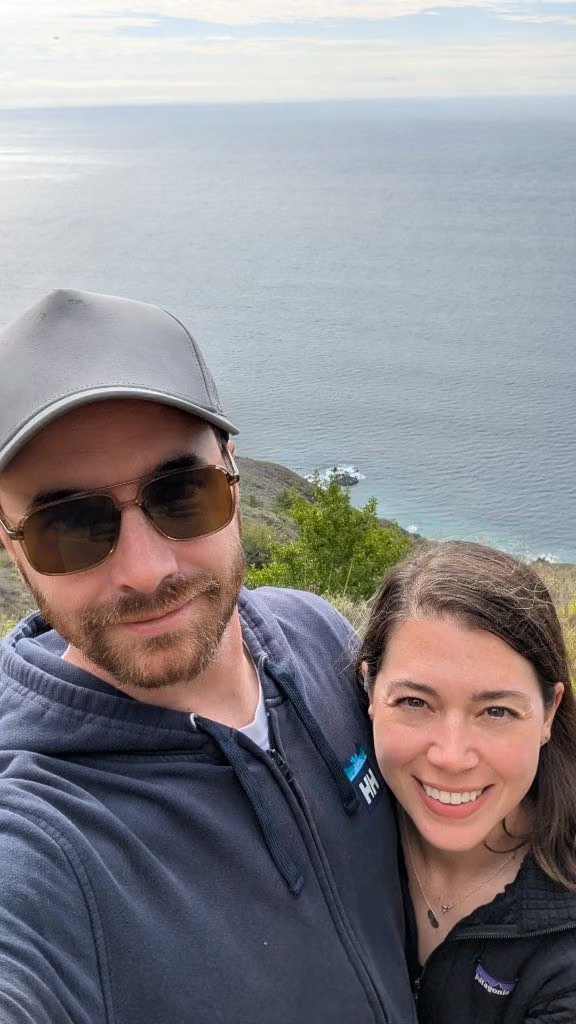
He was 38. Active. The kind of guy who spent his weekends skiing and hiking through Colorado, then cooking dinner at home with his wife. Health was never much of a concern.
He assumed the issue was his diet, so he changed what he ate and chose foods that seemed easier on his digestive system.
Nothing changed.
Then came the fatigue. The chills. The body aches. There was no explanation. No pattern. Just a body that felt increasingly unlike his own.
"I knew that I wasn't the one that was gonna have the next set of answers."
“What else could it be?”
His doctor ran tests. Together, they worked through the possibilities. Diet, autoimmune conditions, maybe something else entirely. CT imaging showed signs of inflammation. Mitchell started a course of antibiotics while the search for a cause continued.
But waiting for the next appointment and the next test wasn't enough.
Mitchell wanted more information.
He joined Function for a broader set of lab tests, and added the Galleri® Multi-Cancer Test. Cancer was already on his mind.
“If it’s not my diet and it’s not autoimmune, what else could it be?”
He knew the Galleri test could look for cancer signals across 50+ types of cancer.
“I wanted to control my own destiny with the information I could get.”
A feeling of relief
Before Mitchell saw his result, he received a phone call.
A doctor calling on behalf of Function was contacting him about his Galleri test result.
It was a positive cancer signal.
It wasn’t a cancer diagnosis. Further medical evaluation was needed to determine whether cancer was present.
Still, when Mitchell saw the words “cancer signal,” his reaction surprised him. He actually felt some relief.
He had spent months trying to understand what was happening. This gave him another piece of information he could act on.
“Now that I had the information, I could go take the next step.”
A colonoscopy at 38
Mitchell was already trying to get a colonoscopy scheduled. But at 38, he was almost a decade younger than the age most guidelines recommend for routine colorectal cancer screening.
The process was taking time. Since his Galleri test result had arrived just before his consultation, Mitchell brought it with him.
"I said, 'Hey, these are the symptoms I'm going through. And I've also got this thing.'"
The result helped add urgency.
Within days, Mitchell had his appointment.
A biopsy confirmation
Mitchell woke up from the colonoscopy to news that changed everything.
There was a mass. Possibly malignant.
Biopsies confirmed it: Stage 3 colorectal cancer.
In that same week he was connected to an oncology team. Weeks of searching for an explanation gave way, almost overnight, to a plan.

The sledgehammer
Mitchell sought a second opinion as he considered treatment options.
Ultimately, he and his care team chose to begin with an intensive regimen.
“I think it’s the sledgehammer. We wanted to wield the biggest weapon that we could.”
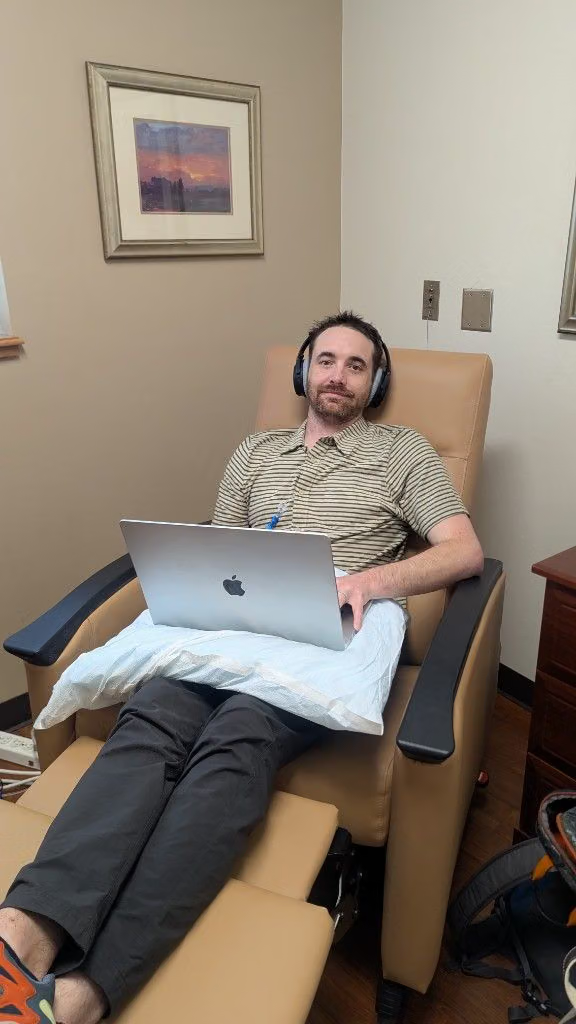
Treatment was difficult. Every 2 weeks, Mitchell spent hours receiving chemotherapy. He went home with a pump for another 2 days. Fatigue accumulated with each round.
One treatment had also caused severe cold sensitivity.
For someone who loves Colorado summers, this was tough.
“Probably all I’ve wanted is a glass of cold iced tea.”
His strongest teammate
His wife has stayed close through the ups and downs.
“You realize how strong some of your relationships are.”
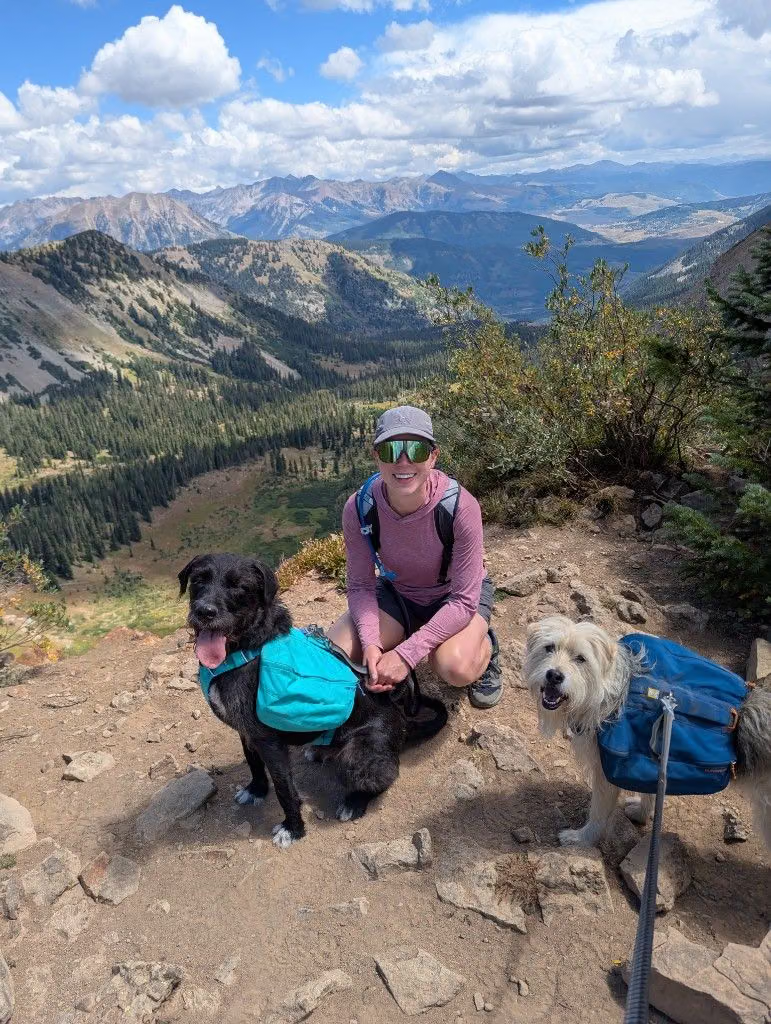
His 2 dogs are on the support team, too. Though Mitchell admits their loyalty gets a little shaky around mealtime.
And slowly, his energy is coming back. He’s thinking about getting outside again. About the Colorado fall. And, when the snow comes, skiing with his wife.
His story is still unfolding. But the experience has already changed what Mitchell believes about owning his health.
“You have to be your own advocate.”
For him, that means asking questions when something feels different. Getting more information on his own terms. And using what he knows to keep moving forward.
“Avoiding hard truths doesn’t make them go away.”