

At a glance
-
Function member: Sarah, member since 2025
-
Function focus: LDL Cholesterol, ApoB, hs-CRP
-
Discovery: Coronary artery spasms and microvascular dysfunction
71 degrees was freezing
Sarah’s fingers were freezing. So were her toes and the tip of her nose.
The room was 71°F. Everyone around her seemed perfectly comfortable.
She also had horizontal ridges across her toenails.
At 39, Sarah didn’t know if these little changes meant anything. But she was paying attention.
“I just couldn't shake the fact that maybe my body was trying to give me some type of warning.”
Sarah wanted to know more, so she searched online and eventually discovered Function.
“I was just so desperate.”
Then came the chest pain.
Maybe it was indigestion
It started as pressure. Then the pain traveled through the right side of Sarah’s chest and shoulder, into her back, jaw, and lower teeth.
She went straight to the emergency room where the medical team ran an EKG and lab tests used to evaluate serious cardiac events.
Sarah was grateful to hear the message: “Good news. You’re not having a heart attack.”
But what was causing the pain?
With no clear explanation, the team suggested her symptoms could be related to indigestion and gave Sarah an antacid.
Even with the stress of the emergency, she remembered what was on her phone.
“Look at all the red”
Sarah’s results through Function had started arriving while she was in the hospital.
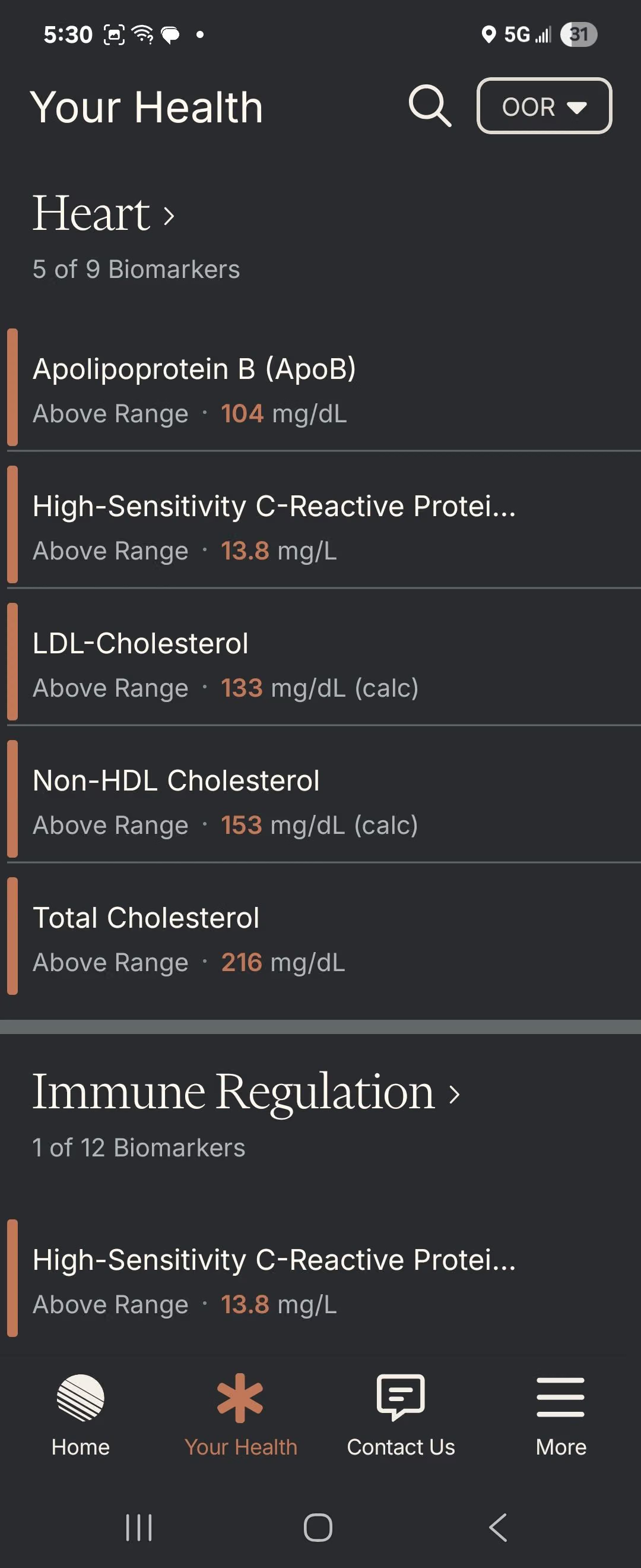
She saw several of her heart health markers were out of range.
Her LDL Cholesterol and Apolipoprotein B (ApoB) were above range. Her hs-CRP, a marker of low-grade systemic inflammation, was also elevated.
She handed her phone to the ER doctor.
“I said, ‘Look. Look at all the red. Something’s wrong. I don’t know what’s wrong, but something’s wrong.’”
Within 3 days, she was sitting with a cardiologist.
A surprising diagnosis
Sarah’s cardiologist listened carefully to what had happened.
When did the pressure start? How long did it last? Was she moving or resting when it happened?
He ordered further evaluation, including an echocardiogram and another EKG.
Eventually, Sarah and her doctor found a culprit: coronary artery spasms.
Instead of a fixed blockage caused by plaque buildup, the coronary arteries can temporarily tighten, reducing blood flow and causing symptoms that can resemble those of a heart attack. Vasospastic angina is the term used to describe the chest pain that can occur because of coronary artery spasms.
More evaluation eventually led to another diagnosis: microvascular dysfunction, where the tiny blood vessels of the heart do not work properly.
For Sarah, she was relieved to have more insight but also surprised this was happening at her age.
“I had kind of a stereotype of what heart disease looks like and who has heart disease. And it definitely didn’t look like me.”
Something to celebrate
Sarah continued working with her cardiologist to manage her heart health.
Her treatment included medication and paying closer attention to her nutrition and how much she moved throughout the day.
Before, Sarah could spend most of an 8-hour workday sitting at her desk. Now, she was taking walks with her co-workers. At home, she started to use a walking pad.
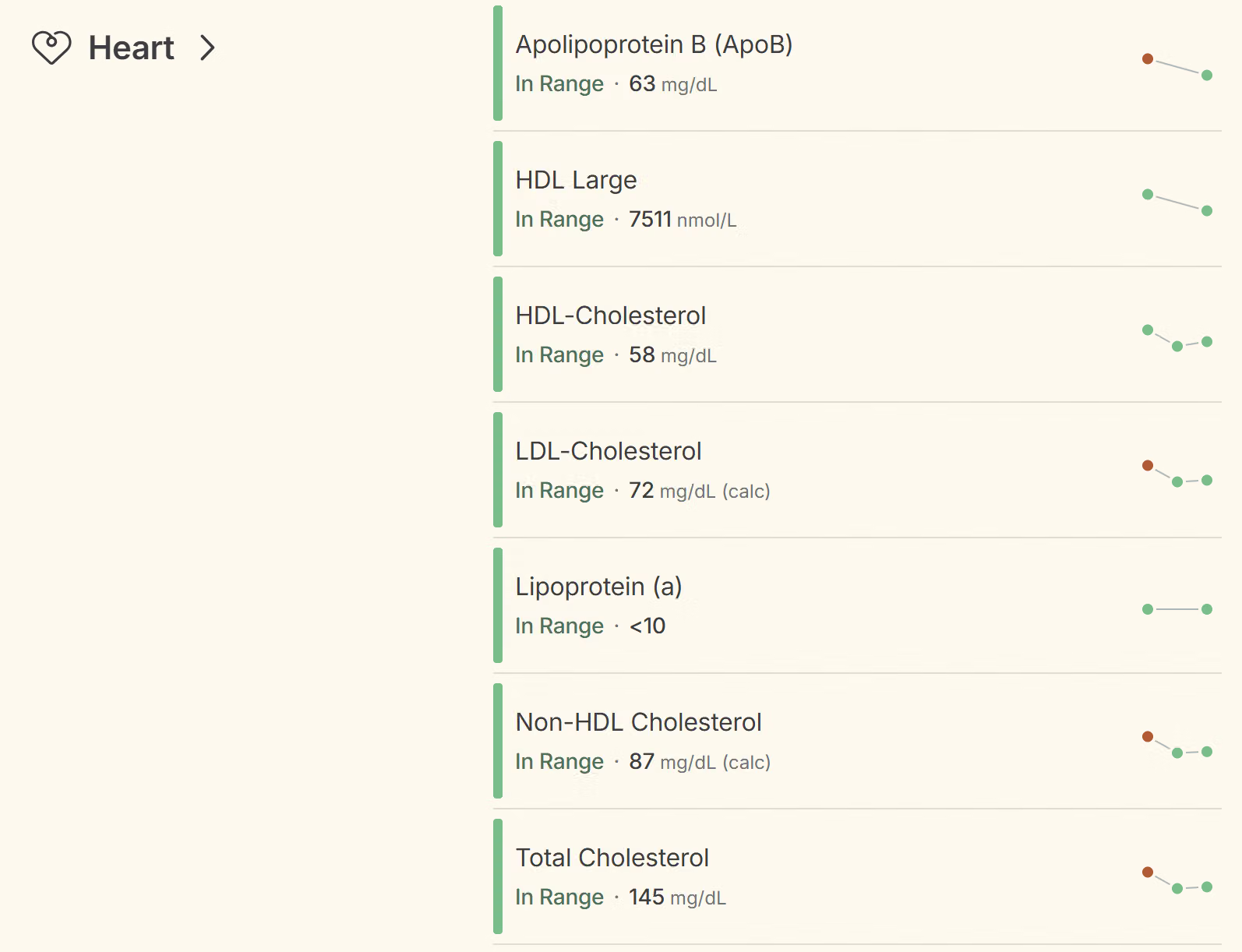
When she did her Mid-Year Test through Function, her LDL Cholesterol was now in range. Her hs-CRP had also decreased.
“I think I probably jumped up and down at the cardiologist’s office because we were just so excited.”

A 2-way street
Sarah and her husband have 2 daughters, ages 17 and 10. Together, they love to bike, dance, and sing into whatever objects make good pretend microphones.
And they love archery.
“I just feel so blessed to be able to now do some of those activities that I couldn’t do probably for the last 2 years.”
And the experience has shifted how she shows up to her visits.
She brings her results. She prepares questions. And she confidently asks about what she doesn’t understand.
“I feel like my conversations with my doctor are now a 2-way street.”
“Function allows you to be in the driver’s seat”.