
At a glance
-
Function member: Tanner, member since 2023
-
Function focus: Prostate Specific Antigen (PSA)
-
Discovery: Rising PSA; biopsy confirmed prostate cancer
Nothing to worry about
The first time Tanner noticed his Prostate Specific Antigen (PSA), he didn’t think much of it.
His Function results showed it was around 1.0 ng/mL and still in range. But a friend his age had tested around the same time, and his number was much lower.
Tanner remembers thinking it was “a little weird.”
He brought the result to his primary care doctor and was told not to worry.
So Tanner moved on.
About a year later, he tested again with Function. His PSA had more than doubled to 2.6 ng/mL.
His Clinician Notes suggested following up with his doctor.
Again, Tanner heard a version of the same thing: It was probably nothing.
The climb continues
By his next test, Tanner's PSA had climbed to 4.8 ng/mL. It was now out of range.
This time, he insisted on taking action.
“I had the data to show, ‘I have it here. I’ve been tracking this for 3 years now. We need to do something.’”
He asked for a referral to a urologist.
Tanner printed his results and brought them with him. The urologist told him that prostate cancer would be unusual at his age, but agreed to order an MRI.
The MRI showed 2 lesions.
One option was to wait 6 months and check his PSA again. But Tanner had already watched it rise for years.
He wanted the biopsy.
“I didn’t even have symptoms."
Seven of 15 biopsy samples came back positive.
Gleason 4+3 (moderately aggressive) prostate cancer. At 35.
“It was pretty unbelievable.”
What stayed with Tanner was how little he had felt along the way.
No obvious warning signs had pushed him to investigate.
“I didn’t even have symptoms.”
The only change had been showing up in his results.
Another 10 years
Tanner had another reason to keep pushing.
He and his wife had 4 young children.
“All I could think was, if I get another 10 years, I can see my oldest daughter graduate.”
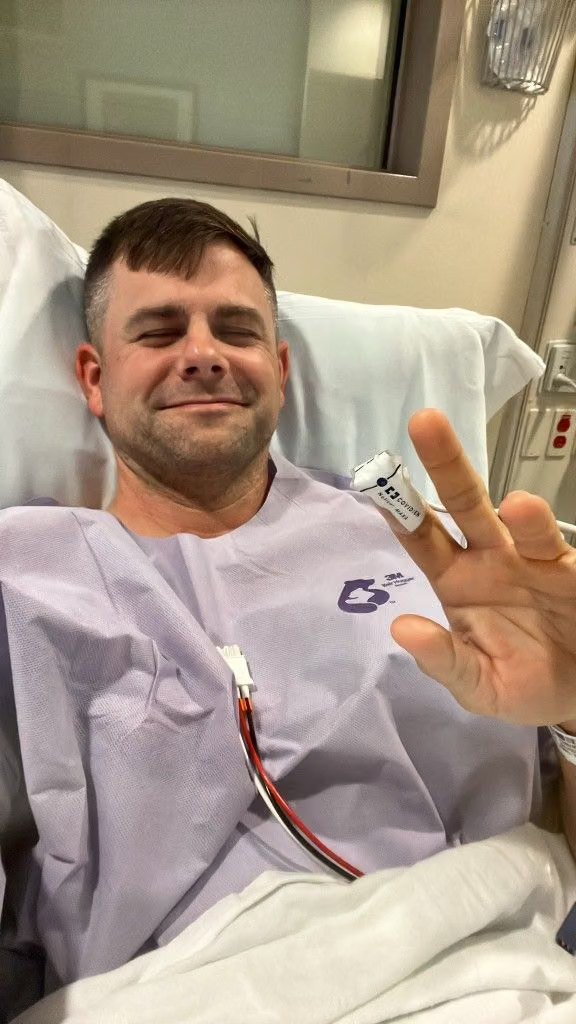
Tanner met with a surgeon and radiation oncologist to discuss treatment. Ultimately, he chose surgery and underwent a radical prostatectomy.
His physical recovery went well.
But the experience changed the way he looked at the life waiting for him after it.
“But you found it”
Tanner had spent much of his adult life planning for a future he assumed was guaranteed. Saving for retirement since 18, working late, postponing things for "someday."
When he told his brother he felt cursed with the worst luck imaginable with cancer at 35, his brother said, "But you found it."
Now Tanner logs off at 5 p.m. No calls, no email.
And he and his wife have stopped postponing trips. France this year. Rome next.
"Work can wait."

A baby girl
Before Tanner’s surgery, he and his wife decided to try for one more child.
Now they’re expecting a baby girl. Soon, Tanner will be a father of 5.
When he thinks about the future, he pictures Thanksgiving 20 years from now. His kids coming home. Everyone sitting around the table.
“Our lives are so full. It’s just a total blessing to have them.”
For Tanner, owning his health now means paying attention to what’s changing, asking questions, and speaking up when something doesn’t make sense.
“No one’s gonna care as much about your health as you do. So you really have to take control.”