
At a glance
-
Most MRIs happen after something raises a flag: persistent pain, an abnormal test result, or another reason for a doctor to investigate. But an MRI can also be used before symptoms appear. It can show changes in organs, tissues, and other parts of your anatomy—and can help you establish a baseline that you can track every year. Here’s what to know if you’re considering making an MRI part of your yearly health check.
What an MRI can tell you before symptoms appear
Feeling healthy and knowing what’s happening inside your body aren’t always the same thing.
For certain diseases, such as many cancers, symptoms often only develop once the disease has progressed. Identifying abnormal findings early is highly beneficial—it can help with earlier treatment and better outcomes. Across cancers like breast, colorectal, and lung, 5‑year survival tends to be much higher at Stage 1 than at Stage 4.
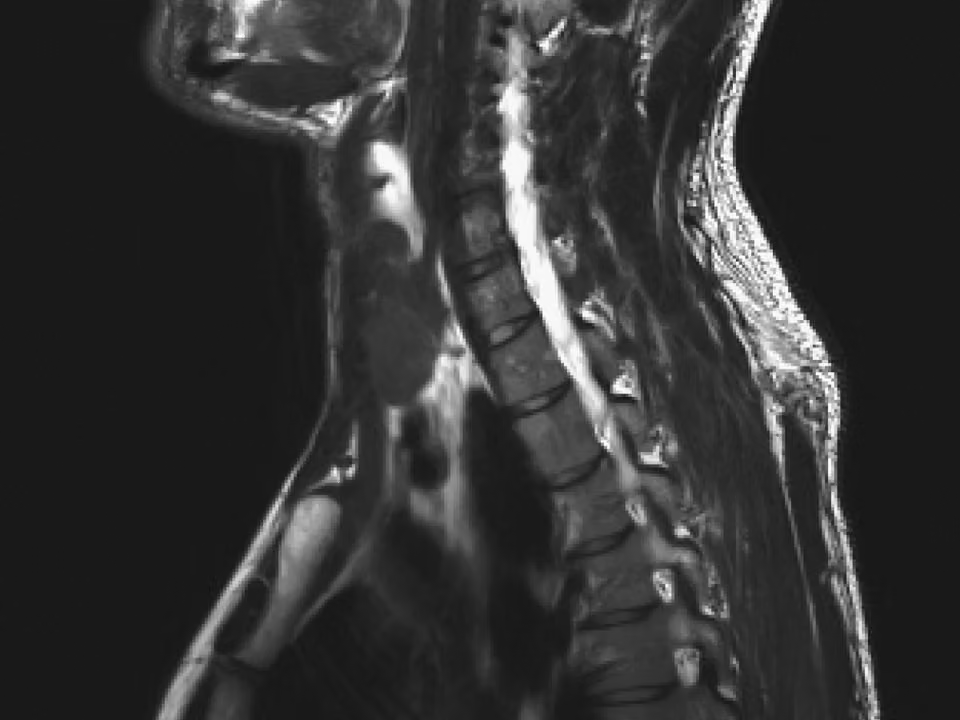
An MRI, which creates detailed images of your organs and tissues, is one helpful tool that can flag things that may need a closer look. But that’s different from the way MRIs are traditionally used. A doctor typically orders an MRI to investigate something specific, such as a symptom, risk factor, or abnormal test result.
A proactive, annual MRI starts from a different place: establishing what’s normal for you before there’s a specific concern.
Your first MRI provides a snapshot. Repeat it the following year, and there’s something to compare it with. Over time, those comparisons can help reveal changes that weren’t present—or may have been too small to find—on an earlier MRI.
One MRI is a snapshot. Two MRIs start to show a trend.
How MRI and labs work together
Lab tests and MRIs answer different questions about your body.
Lab tests measure signals in your blood and urine, including markers related to inflammation, heart health, hormones, and metabolic health.
An MRI creates images of your anatomy: your organs, tissues, and other changes. This could include signs of abdominal aortic aneurysm, uterine fibroids, nodules or masses, and more.
Neither replaces the other. Together, they can give you a clearer picture of your health—and something to track over time.
Why getting an MRI can be complicated
Even if you want an MRI before symptoms appear, getting one through the traditional route isn’t always straightforward.
MRIs commonly require an order from a physician. Insurance may also require evidence that the MRI is medically necessary before approving it.
Then there’s cost. What you pay can vary based on where you live, the facility you use, the area being scanned, and your insurance coverage. Hospital-based imaging may also come with different facility costs than an outpatient imaging center.
That can make something as simple as answering “What will this MRI cost me?” surprisingly difficult.
A simpler way to get an MRI
Function works differently with its Annual MRI, which is $899 for members. No referrals or insurance are necessary, and it brings the price down through how its MRIs are run:
- Optimized protocols and AI-enabled imaging technology reduce the time taken for the MRI itself and the reporting time.
- A network of established imaging partners means Function uses existing infrastructure and appointment capacity instead of building new facilities.
Those efficiencies, not a lower standard of care, are what bring the cost down from what could be $10,000-plus elsewhere. Here's what scheduling actually looks like:
- You schedule your MRI directly at 200+ locations nationwide.
- You pay a flat, transparent price. No insurance claims, no surprise bills, and HSA/FSA eligible.
- Your results are reviewed by a board-certified radiologist, and you get clear next steps.
There's no negotiation or long waits. You decide when to get an MRI.
What Function’s Annual MRI looks for
The Annual MRI scans the head, neck, abdomen, and pelvis. It looks for signs of hundreds of potential conditions, including cancers of the brain, liver, pancreas, kidneys, ovaries, and prostate.
It can also look for signs of:
- Prior stroke
- Abdominal aortic aneurysm
- Fatty liver
- Uterine fibroids
- Sinus inflammation
- Cysts
- Liver fibrosis
- Iron overload
It’s important to understand what this kind of MRI is—and what it isn’t:
The Annual MRI is a non-contrast MRI designed to look for early signs of disease. It isn’t designed to investigate a known symptom, diagnose an existing condition, or replace guideline-based screening such as mammograms or colonoscopies.
Should you get an MRI every year?
Start with what you want to know.
If you have symptoms or an existing condition you need evaluated, the Annual MRI isn’t designed for that. Talk to your doctor about the appropriate next step.
But if you feel well and want to establish a baseline and see how your body changes over time, an Annual MRI is a powerful tool.
And if you already track your health through Function’s 160+ lab tests, pairing the two gives you two complementary views: what’s happening in your blood and urine, and what’s happening inside your organs, tissues, and more.
Your health isn’t static. Your yearly health check shouldn’t be either.
End notes
Chung KC, Muthutantri A, Goldsmith GG, Watts MR, Brown AE, Patrick DL. Symptom impact and health-related quality of life (HRQoL) assessment by cancer stage: a narrative literature review. BMC Cancer. 2024;24:884. doi:10.1186/s12885-024-12612-z
Siegel RL, Kratzer TB, Wagle NS, Sung H, Jemal A. Cancer statistics, 2026. CA: A Cancer Journal for Clinicians. 2026;76(1):e70043. doi:10.3322/caac.70043